A camera on a cable moves sixty feet underground, past the foundation, past the flower bed, out toward the street. On the monitor, the plumber points at a joint where tree roots have worked their way in, then at a low spot where waste has started to pool. This is the sewer lateral, the private pipe that carries a house's wastewater out to the public main, and in a lot of Kirkwood homes it's original to a house built before the Truman administration.
The inspection report lands in the buyer's inbox that afternoon. Both sides start doing math on a repair that regional inspection data typically prices between $3,000 and $10,000. What almost nobody in that conversation realizes: the seller has been paying an annual fee for years that the City of Kirkwood says could cover most of it. They just never had a reason to read the fine print until now.
The Line Item You've Never Noticed
Kirkwood runs a Sewer Lateral Repair Insurance Program, funded by an annual charge that has sat at roughly $28 a year for the better part of a decade, collected the same way as any other municipal fee. The Metropolitan St. Louis Sewer District maintains the public main under the street, but it does not fund lateral repairs. That responsibility sits with the property owner, and Kirkwood built its own insurance-style backstop to soften that cost.
The catch is that almost nobody interacts with the program until something breaks, which means most homeowners have no idea it exists, what it covers, or how to file. Applications run through the Kirkwood Public Portal, and questions go to the Building Division at 314-984-6942, where Phil Smith handles the program directly. If your first conversation with that office happens during an active home sale, you're already behind.
What the Policy Actually Pays
Here's how a claim moves once you do know to file one. The homeowner applies online and puts down a $400 deposit. The city's approved contractor, River City Sewer & Drain, performs a video inspection to determine whether the damage qualifies. If it doesn't, the cost of that inspection and any cabling gets deducted from the deposit and the rest comes back to you. If it does qualify, the homeowner collects three bids from city-approved contractors, hires the lowest bidder, and the city pays that contractor directly for 75 percent of the invoice. That arrangement is more generous than it sounds until you read what's excluded.
The program doesn't touch pipe inside the home, under the basement or foundation, or within a foot of the exterior wall. It doesn't cover rebuilding a porch, deck, fence, or retaining wall if that structure has to come out to reach the pipe. And it explicitly excludes newer homes: any lateral on a house within five years of construction completion is not eligible.
The Fine Print Changes By ZIP Code
A 2018 Webster-Kirkwood Times report compared Kirkwood's program with its neighbors as follows:
| City | Annual Fee | City Share | Project Cap |
|---|---|---|---|
| Kirkwood | ~$28/year | 75% | No cap |
| Shrewsbury | ~$28/year | 80% | $3,500 |
| Glendale | ~$50/year | 100% | $6,000 |
Kirkwood's own numbers still match its current program page: 75 percent. Shrewsbury and Glendale's figures may or may not have moved since, and the honest answer is you'd need to call each city to confirm. The point isn't the exact table. It's that these programs are built city by city, not as one regional standard, so an assumption based on a neighbor's program, or on what a friend in Webster Groves told you, can be wrong for your address.
Why This Shows Up More Often Here
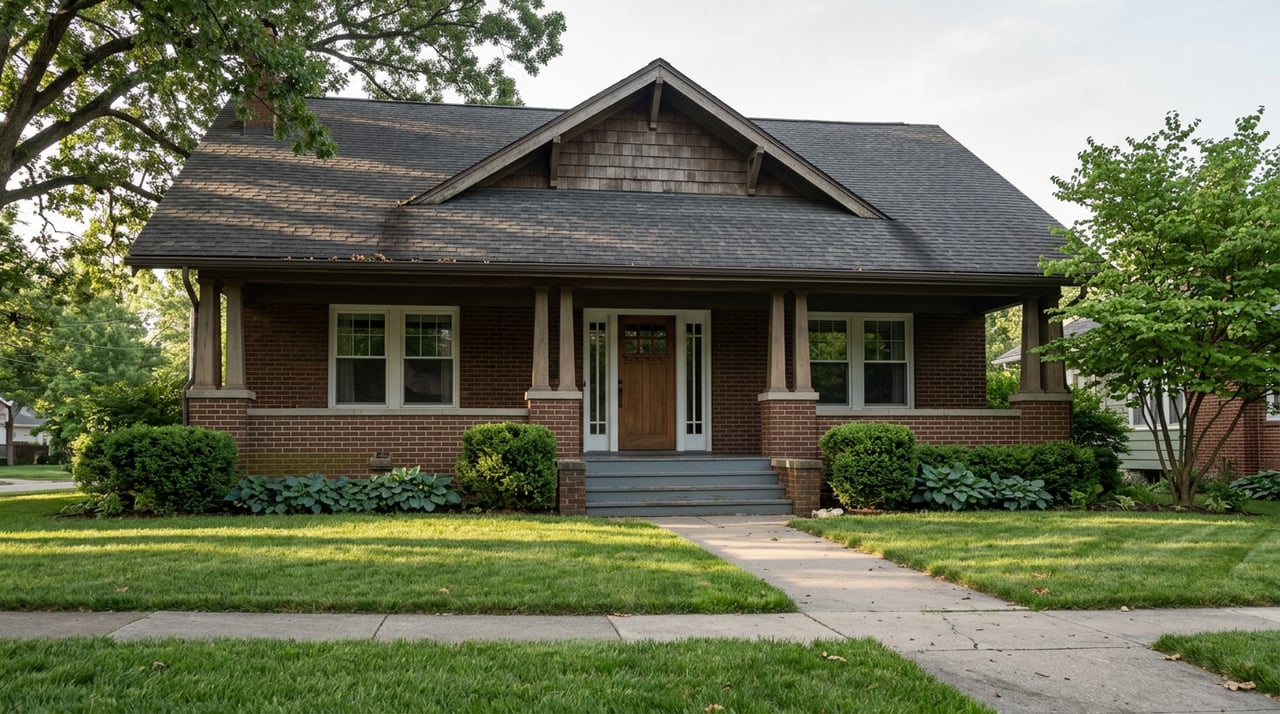
Kirkwood's housing stock is part of why this matters more here than it would somewhere with an entirely newer housing stock. The dominant building type downtown and in the neighborhoods around it is pre-1940: brick bungalows, Victorians, and Craftsman-style homes, many sitting on rubble-stone basements with the original clay sewer lateral still in the ground. Clay pipe shifts as soil settles, and it's exactly the material tree roots are best at finding their way into. Local cash-buyer and investor pricing guides for the Kirkwood market already flag sewer lateral condition, alongside basement moisture and roof wear, as a line item that moves a final offer up or down.
None of that makes an older Kirkwood house a bad buy. It does mean a lateral scope, which typically runs somewhere in the $150 to $300 range as a standalone add-on to a home inspection, is one of the cheapest ways to know what you're actually negotiating over before an offer gets made.
The Exception That Catches New-Construction Buyers
The five-year exclusion is the detail that surprises people in the other direction. If you're buying one of Kirkwood's newer infill builds, on the theory that new means fewer surprises, the city's program does not cover your lateral. A house within five years of construction completion with a failed lateral and no working warranty has no city program to fall back on at all.
The Insurance Isn't a Blank Check
The program has run tight before. In 2018, Webster-Kirkwood Times reporting on the fund's balance found the city debating what happens if the account runs dry faster than the annual fee refills it. As the Webster-Kirkwood Times reported, City Manager Steve Wylie told the council: "We'd have to tell people we're out of money." The council ultimately kept the program running, but the episode is a reminder that a 75 percent reimbursement isn't a guaranteed same-week check. It depends on where the fund balance stands when your claim gets filed, and on how many other Kirkwood homeowners filed ahead of you.
What This Means If You're Listing or Under Contract
- Get a camera scope of the lateral before you list, not after a buyer's inspector finds the problem for you. Knowing the condition changes how you price and how you negotiate.
- Call the Building Division and ask about current fund status before you assume the 75 percent is instantly available. A queue is still a possibility.
- If your home is newer, confirm whether a builder's warranty is still active and what it actually covers, since the city's program isn't a fallback here.
- Factor the $400 deposit and the three-bid process into your closing timeline if a repair credit or pre-closing fix is on the table. This isn't a same-day fix.
- Don't assume what worked for a friend's house in Shrewsbury or Glendale applies to yours. Confirm Kirkwood's specific terms directly with the Building Division.
FAQ
Does MSD pay for a sewer lateral repair in Kirkwood? No. The Metropolitan St. Louis Sewer District maintains the public main under the street, but the private lateral connecting your house to that main is the homeowner's responsibility, insurance program or not.
What if my Kirkwood home was built in the last five years? The city's program excludes laterals on homes within five years of construction completion, on the assumption a builder's warranty is still active. Confirm your warranty status directly with the builder rather than assuming coverage exists somewhere.
How long does reimbursement actually take? There's no fixed number, since the timeline depends on the video inspection, the three-bid process, and the fund's current balance. Ask the Building Division for a realistic estimate before you build a repair into your closing timeline.
A sewer lateral finding doesn't have to derail a Kirkwood sale, but it changes the conversation when one side knows the city's program exists and the other doesn't. If you're getting ready to list, or you're under contract and just got an inspection report with a camera image on it, Show + Sell STL can help you figure out what's actually covered, what isn't, and how to keep the timeline on track. Get Your Free Home Valuation and let's talk through what your specific address is dealing with before it becomes a negotiation surprise.
This article is general information, not legal, tax or financial advice. Consult a qualified professional about your situation.