If you are shopping in Town and Country, “estate living” can mean more than a large lot and a private drive. In this market, the way a property is zoned, how a subdivision is governed, and what ongoing dues actually cover can all shape your day-to-day ownership. When you understand those layers early, you can buy with more confidence and fewer surprises. Let’s dive in.
What estate living means in Town and Country
In Town and Country, estate living has a real local definition. The city has dedicated Estate and Suburban Estate zoning districts, and those standards help shape lot size, spacing, and the overall feel of a neighborhood.
The Estate district is meant to preserve neighborhoods where original lots were generally 80,000 square feet or more. It is also designed to protect rural character from being changed through resubdivision. In this district, residential lots must be at least 80,000 square feet, with at least 175 feet of width and a 50-foot street setback.
The Suburban Estate district, often called SE, is a little smaller but still spacious by most suburban standards. It is intended to preserve the single-family character of the area while allowing compatible development on remaining vacant land. In the SE district, the minimum lot area is 43,560 square feet, with 150 feet of width and a 50-foot street setback.
For you as a buyer, that matters because the city is not leaving neighborhood form to chance. Town and Country’s planning framework is designed to protect character and values, encourage appropriate land use, manage natural resources, and guide growth in a consistent way.
Why neighborhood feel stays consistent
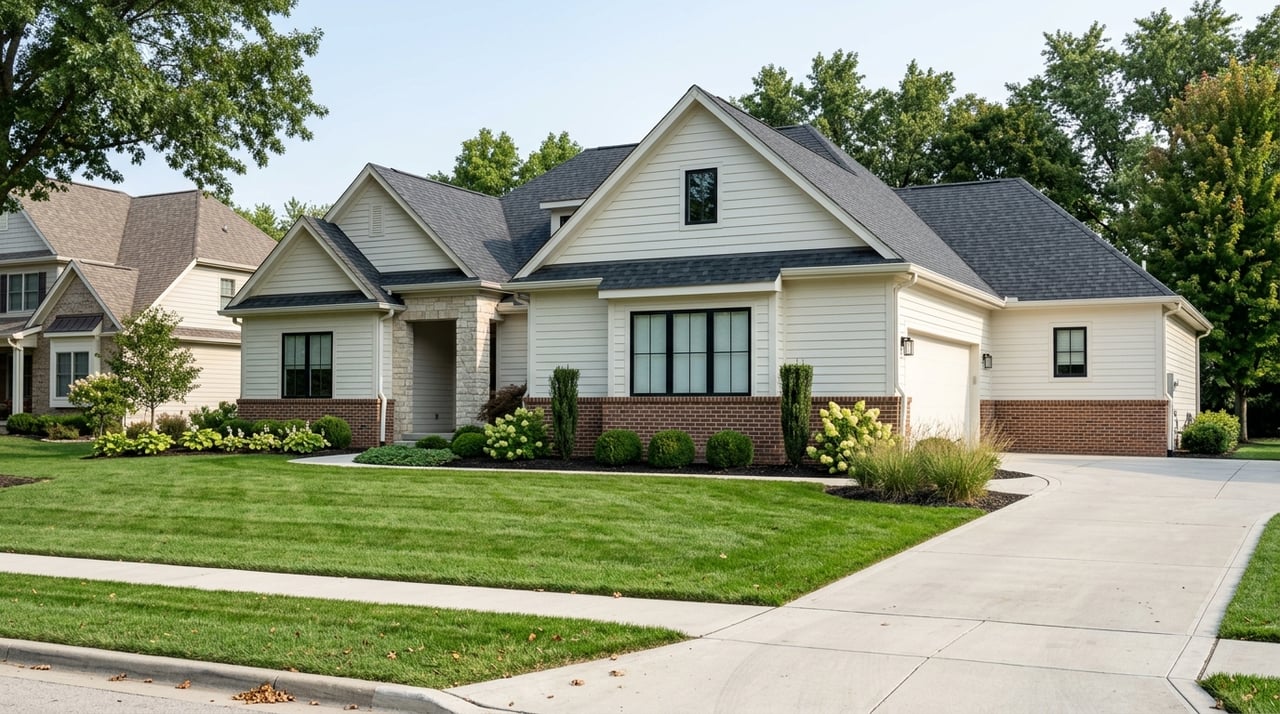
Town and Country’s 2020 comprehensive plan describes estate areas as low-density single-family development with landscape buffers and a maximum building height of two stories. That helps explain why many areas feel open, quiet, and visually consistent even before you look at any private subdivision rules.
In other words, the “estate” experience often starts with city policy, not just an HOA. Large setbacks, wide lots, and lower-density development work together to create spacing and scale that many buyers specifically want in Town and Country.
How HOA and trustee rules fit in
One of the most important things to understand is that city rules and private neighborhood rules can overlap. A home may be subject to municipal zoning requirements, subdivision indentures, and trustee or HOA expectations at the same time.
The city explains that subdivision indentures are private contractual agreements. If there is a violation, enforcement is generally a civil matter rather than a municipal code matter. The city also notes that indentures should be drafted or amended with an attorney and reviewed by the city for compliance before they are recorded.
That means two nearby neighborhoods may offer very different ownership experiences. One may feel mostly shaped by zoning, while another may include more active trustee oversight, maintenance obligations, or amenity-related rules.
Street maintenance can vary by subdivision
Street maintenance is another detail buyers often miss. According to the city, about 60 percent of residential streets in Town and Country are city-maintained, while the other 40 percent are maintained by subdivision trustees or adjacent property owners.
The city says snow removal is available on request on many of those non-city-maintained streets. Still, it is smart to ask who handles routine upkeep, winter weather response, and any shared costs before you write an offer. That answer can affect both your monthly budget and your expectations for neighborhood maintenance.
City review may apply to exterior changes
Even if a neighborhood has trustees or an HOA, city review can still be a separate step. Town and Country’s Architectural Review Board reviews new residences, additions over 500 square feet, subdivision gates, non-residential construction, roof-mounted solar panels that do not face a street, and residential accessory buildings that require a conditional use permit.
The Architectural Review Board is made up of eight residents, and at least three must have a building or design background. It typically meets on the first Monday of the month at 5:30 p.m., requires material samples at the meeting, and charges a $350 application fee.
For buyers, the takeaway is simple: exterior projects may require more than one approval path. If you are planning to expand, add an accessory structure, install certain features, or make visible exterior changes, you may need both private subdivision approval and city review.
Even fences have more than one layer
Fences are a good example of how this overlap works. Town and Country requires a permit for all fences. The city generally allows six-foot fences on side and rear yards if they have at least 30 percent open area, while front-yard fences are much more limited.
The fence application also asks for a site plan or survey and contact with subdivision trustees. That small detail says a lot about ownership in Town and Country. You are not just buying a home. In many cases, you are buying into a framework of city standards plus neighborhood-specific expectations.
What HOA dues may look like
HOA and trustee costs in Town and Country can vary widely. Some neighborhoods have limited annual dues for common ground or basic maintenance, while others offer a much broader package with amenities and services.
Recent public listings show examples across that range. One townhouse community listed amenities such as a clubhouse, gated access, lake, pickleball, pool, security, tennis courts, and trails, with an HOA fee of $835 per month covering insurance, grounds, common-area maintenance, pool maintenance, roof, security, snow removal, and trash.
At the lighter end, recent single-family listings have shown dues such as $250 per year for maintenance grounds and $600 per year for common ground. A gated Country Life Acres listing showed $2,000 per year for common-area maintenance. A newer Deer Hollow community has advertised lawn care and snow removal as part of a low-maintenance lifestyle.
Look past the fee amount
The real budgeting question is not just how much the dues cost. It is what they actually include.
A higher monthly fee may cover items that reduce your personal maintenance load, such as roof replacement, landscaping, snow removal, trash, or gate upkeep. A lower annual fee may leave more responsibility with individual owners. Neither model is automatically better. It depends on the kind of ownership experience you want.
What to review before you make an offer
If you are considering an estate property or an HOA-governed home in Town and Country, document review matters. Before moving forward, buyers should review the declaration or indentures, bylaws, rules, budget, reserve study, insurance, recent board minutes, and any history of special assessments with the help of their agent, title company, and attorney.
This is especially important in Town and Country because future improvements may be shaped by both city requirements and private neighborhood rules. You want to understand not only the house itself, but also the operating structure that comes with it.
Smart questions to ask in Town and Country
As you compare homes, a few practical questions can help you see the full picture.
- What exactly do the dues cover?
- Are any special assessments planned or being discussed?
- Who maintains the roads, snow removal, drainage, and common ground?
- Are there restrictions on fences, pools, roofs, solar, pets, parking, leasing, or exterior colors and materials?
- Is the home in the Estate district or the SE district?
- For future exterior work, would you need HOA or trustee approval, city Architectural Review Board approval, or both?
These questions can help you avoid surprises after closing. They also give you a better sense of long-term cost, maintenance responsibility, and future flexibility.
Why this matters for resale too
The rules that shape your ownership experience can also influence resale. Some buyers are drawn to strong neighborhood standards, larger lots, and consistent visual character. Others may focus more on flexibility, lower dues, or fewer approval steps for future projects.
When you understand a property’s zoning district, subdivision governance, and maintenance structure up front, you are in a better position to judge whether it matches your goals today and still makes sense later. That is especially valuable in a market like Town and Country, where two homes with a similar price point can come with very different ownership expectations.
The bottom line on estate and HOA living
In Town and Country, estate living often delivers space, privacy, and a stronger sense of neighborhood continuity. The tradeoff is that ownership can come with a more detailed rulebook and a broader range of costs than many buyers expect at first glance.
That does not have to be a downside. It just means the smartest move is to look beyond the front door and understand the full structure around the property before you commit. If you want help comparing neighborhoods, reviewing the practical differences between communities, or finding the right fit for your goals, connect with Show + Sell STL.
FAQs
What does estate zoning mean in Town and Country?
- In Town and Country, estate zoning refers to local districts with larger minimum lot sizes, wider lot widths, and setback standards designed to preserve low-density single-family character and neighborhood spacing.
What is the difference between Estate and SE zoning in Town and Country?
- The Estate district requires at least 80,000 square feet of lot area and 175 feet of width, while the SE district requires at least 43,560 square feet and 150 feet of width, and both require a 50-foot street setback.
Do HOA rules and city rules both apply to Town and Country homes?
- Yes. A home may be subject to city zoning and permitting requirements as well as private subdivision indentures, trustee rules, or HOA requirements.
Does Town and Country review home additions and exterior projects?
- Yes. Certain projects, including new homes, additions over 500 square feet, some solar installations, subdivision gates, and some accessory buildings, must go through the city’s Architectural Review Board before permitting.
Are all streets city-maintained in Town and Country neighborhoods?
- No. The city says about 60 percent of residential streets are city-maintained, while the remaining 40 percent are maintained by subdivision trustees or adjacent property owners.
What should buyers review before buying in a Town and Country HOA or estate subdivision?
- Buyers should review the subdivision indentures or declaration, bylaws, rules, budget, reserve study, insurance, recent board minutes, and any special-assessment history, along with maintenance responsibilities and approval requirements for future improvements.